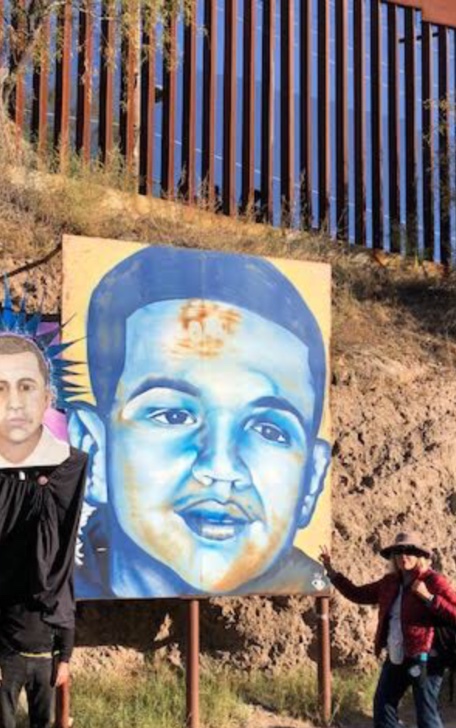
↓
 

Pacifica Voice

Serving the Coastal Communities of Pacifica California

Pacifica Voice
  • Current Edition
  • Past Editions
    • January 2026 Edition
    • August 2025 Edition
    • All Past Editions
  • Subscribe
  • About

Author Archives: pv_adminus

Post navigation

<< 1 2

CPUP Sues Pacifica for Land Use Violations in Monterey Road Development

Pacifica Voice Posted on December 23, 2020 by pv_adminusDecember 23, 2020

Pacificans Sue the City of Pacifica Over Violation of CEQA and California’s Planning and Land Use Laws.
Coalition of Pacificans for an Updated Plan and Responsible Planning (CPUP)

Note: See Pacifica Voice August 2020 Edition for the original article on “A LETTER ON DEVELOPMENT AND ENVIRONMENTAL IMPACT Author Summer Lee” 

Pacifica, December 21st, 2020 — Kristin Cramer and the Coalition of Pacificans for an Updated Plan and Responsible Planning (CPUP)* filed litigation today against the City of Pacifica to force the City’s compliance with the California Environmental Quality Act (CEQA) and California’s Planning and Land Use Laws regarding the proposed Vista Mar development on Monterey Road. The plaintiffs are represented by the Law Offices of Brian Gaffney APC in conjunction with Lozeau | Drury LLP.

The development consists of 8 luxury condominiums on a 1.2 acre property with a 52% slope and a history of landslides. The project would require clearing 57 trees, paving over a probable wetland, and excavating 6,453 cubic yards of soil. At City Planning and City Council meetings, neighbors voiced concerns about environmental degradation, as well as increased risks of landslides and erosion on a hillside that already struggles with flooding on an annual basis.

Four experts from the fields of biology, hydrology, air quality and geology supplied testimony that provided substantial evidence of environmental consequences that are not adequately mitigated. Under the California Environmental Quality Act (CEQA), such expert testimony requires an Environmental Impact Report (EIR) to be performed before development can occur. Despite these laws, the City Council voted to approve the project at the appeal hearing on November 23rd.

“We are community members on a journey of unfortunate discovery. In the beginning we thought the City didn’t understand the problems of the Vista Mar project. We went to great lengths to research and present the technical problems with the site and to our surprise were faced with a City that wasn’t listening and was using a type-written document from 1980 to base its decision-making. We banded together with our collective resources to support what is our last-resort — a legal remedy to compel the city to keep its citizens safe,” said Summer Lee, an artist, who is co-founder of CPUP.

The lawsuit will also focus on the City’s failure to comply with their General Plan, which has not been comprehensively updated since 1980, making Pacifica’s one of the oldest in the state. The General Plan is the set of documents that detail the guiding standards on which a city must base its land use and development decisions. The lawsuit contends that as it stands, the document is legally inadequate, fatally out of date, and internally inconsistent. For example, the Safety Element of the General Plan was altered in 1983, after an El Niño event resulted in over 475 landslides in Pacifica, large-scale evacuations and the unfortunate loss of life. Despite this, the city’s landslide and erosion maps have not been updated to include the City’s most common type of landslide (“debris-flow” slides), which have been recorded on the Vista Mar property. Additionally, the Vista Mar project is inconsistent with numerous General Plan policies which promote protection of significant trees, creeks and riparian habitats, prohibit development on slopes over 40%, maintain natural open space between areas of development, and discourage mass grading and terracing.

“It is shocking to find that the City has not updated its General Plan Safety Element given the technical information in the reports that they themselves commissioned. We are genuinely concerned with neighborhood safety given the history of landslides and flooding on this hillside and we do not have adequate scientific information on which to base the planning review of the project. The 1980 General Plan calls for thorough geotechnical investigations and somehow the City has allowed the project to rely on only two shallow soil borings, neither of which were done where the buildings are proposed,” said Christine Boles, a neighbor and licensed architect.

In reaction to the events of the Vista Mar project approval, CPUP, an unincorporated organization, was formed to address a wider pattern of similar decision-making throughout the City. CPUP believes this state of affairs is enabled by a General Plan that has not been brought up to date to consider the current state of scientific data and the city’s infrastructure, and asserts that until the General Plan is updated, all other development that raises the same issues in regard to the General Plan should be put on hold.

*CPUP is a project of Pacifica’s Environmental Family, a 501(c)(3) organization that supports environmental stewardship and education in the City of Pacifica. For more information, go to www.CPUP.org

SMC Library Nature Journaling and Gifts

Pacifica Voice Posted on November 8, 2020 by pv_adminusNovember 8, 2020

SMC Libraries November Update
Author Paula Teixeria

Nature Journaling TUESDAY Nov 10th
REGISTER HERE

Deepen your experience in nature with nature journaling. Watercolor Nature Journal teacher Kristin Meuser loves sharing her love and connection to nature with others by giving workshops to participants of all levels with step-by-step guidance in the process of creating a memory of one’s time in the natural world. The emphasis of her workshops is on developing the ability to “see” through skill-building exercises including color mixing and matching and unique exercises that de-mystify the art and science of drawing, painting and writing. Kristin will give an introduction to her method of creating a journal page as well as a live demonstration. If you would like to follow along – bring your watercolors, a light blue pencil, a graphite pencil and paper or your journal. REGISTER HERE


Holiday Food and Gifts We are working with the San Mateo County Food Preservers too – We are making Holiday Food Gifts on THURSDAY Nov 12th
REGISTER HERE

Looking for tasty, easy DIY holiday gift ideas? Join San Mateo County Master Food Preservers for this fun and fast-paced “Holiday Gifts from the Kitchen” workshop. You’ll learn a variety of home food preservation techniques and we’ll show you how to put them to use with some simple recipes that will make unique holiday gifts. You’ll get plenty of recipes and ideas for making your gifts beautiful – as well as delicious! REGISTER HERE


We continue to add to our curbside services by offering  walk up service now. At Sharp Park you ring the doorbell and staff will be able to help you with your library needs. At Sanchez you can walk up to the front door and talk with staff. We ask that everyone is wearing a mask.  At curbside we are offering “Grab and Go Book” Just pick up a bundle of kids books, they are already checked out.  A few libraries are also offering bikes and sewing machines to check out.

Curbside Services | San Mateo County Libraries

It’s now easier than ever to pick up items and get access to our collection of books, movies, music, and more! Walk-Up Services. You’re invited to walk up anytime during Curbside Pickup hours and speak with a staff member to arrange a pickup of holds or a curated range of other items from our collection, including preselected book bundles, sewing machines. Select httpss://smcl.org/curbsideservices/

Please Follow SMC Libraries (@smclibraries) on:

  • Facebook
  • Instagram
  • Twitter

Invitation to Community Meeting on Homelessness

Pacifica Voice Posted on September 24, 2020 by pv_adminusOctober 2, 2020

HEAR: Community experts on Pacifica’s homeless.
WHEN: Wednesday, 9/30/20, 7PM – YouTube replay on Pacific Coast TV

WHO: Speakers are

  • Anita Rees, Executive Director of Pacifica Resource Center,
  • TBA from San Mateo County,
  • Pastor Paul Bains, Project WeHope,

and video interviews of Pacifica residents by Alexandra Lacey.

WHAT:

  • San Mateo County had a 127% increase in “RV homeless” between 2017-2019.
  • There is no homeless shelter on the coast.
  • The most common reason for living in a motorhome is loss of housing.
  • Nearly 60% of surveyed Pacifica homeless identified their prior residence as Pacifica or a neighboring town.
  • The homeless are 5 times more likely to contract and become seriously ill with COVID 19.
  • We are likely to experience a 2nd wave of COVID during the fall/winter flu season.
  • As of 9/14/20, Pacifica City Council has declined support for a Safe Parking Program on city streets and lots, or private church lots.


WATCH, LEARN, and ENGAGE


Edition2, 2019

Pacifica Voice Posted on April 6, 2019 by pv_adminusApril 6, 2019

Pacifica Voice

Edition 2, 2019

In this second edition of 2019, Pacifica Voice shares invitations and provides articles on housing and homelessness.

Deirdre Martin invites us to City Council Goal Setting 3/9/19, the Peace People invite us to movie night and discussion 3/9/19, and family and friends of Monica Olsen invite us to her memorial mass 3/23/19.

Pacifica Voice looks at the 2/11/19 City Council meeting on RVs, shares an edited Pacifica Homeless Story by Marsha Murphy, prints San Mateo County’s position on homeless RV parking, and shows Sue Digre’s thoughts on affordable housing for people with developmental disabilities.

INVITATION TO CITY COUNCIL GOAL-SETTING SESSION 3/9/19

Deirdre Martin

Lots happening in Pacifica in the 2018/19 year! The 2018/19 Council goals are still underway until June of this year; but in July, we begin a new year with new goals and a new council. Let us take this opportunity to reflect on all the progress we have made as a community: single-use plastic ban, divestment from fossil fuels and top weapon industries, and more.

In the spirit of progress and collaboration, I would like to invite you to join the City Council on Saturday, March 9th at the Pacifica Police Station for our annual Goal-Setting Session for the upcoming 2019/2020 year. Some of the items I would like to focus on this year include:

  • climate adaptation and readiness
  • fire safety regulations,
  • housing and homelessness including RV parking for the vehicularly housed,
  • general plan and coastal plan updates,
  • and preservation of historical sites of interest.


This public meeting, with posted agenda on the city website, will:

  • start with refreshments at 8:30 am,
  • initiate council goal setting at 10:45 am,
  • entertain public comments (limited to 3 minutes) 12:20- 1:20 pm,
  • and resume goal setting after.

Hope to see you there!


PACIFICA PEACE PEOPLE

Pacifica Peace People came together in the summer of 2003 –a short while after the invasion of Iraq. Here it is sixteen years later, and we are still acting locally and globally for peace. We are a small organization, but we have a following that reaches far and wide in Pacifica.

For about 10 years, we have taken a Peace Ad out in the Pacifica Tribune. We now have about 500 signers to the ad, which is published every September in honor of International Peace Day- a day declared by the United Nations during which the aim is that war will be set aside for one day (Sept. 21st). This year the Pacifica Magazine will be running our Peace Ad. We have already begun to collect signatures. The donations we receive for the Peace Ad are turned into mini-grants for our local schools which use them for activities that promote peace and tolerance in our educational communities. Furthermore, we provide ideas and materials to elementary and junior high schools who want to participate in International Peace Day.

To further the goals of the Pacifica Peace People to create a kinder community, we have been involved with the homeless populations, undocumented immigrants, fair rental policies, high school career days, and events that educate the community on other topics that make Pacifica a place where we can learn together and think about ways to improve the lives of our residents.

We’d like to invite you to “Join the Conversation” on March 9 at the Sharp Park Library at 104 Hilton. Doors open at 6:30, with our 90 minute program beginning at 7:00 pm in the evening. We will be showing a brief video “U.S. Military Spending Explained with Legos,” and another short video on the “Real Harm of Global Arms Trade.” Both provide a springboard to thinking about building a peace economy, a time for discussion, and a chance to write postcards to out Congresswomen and other leaders who make these decisions. Light refreshments will be provided. For more information, contact cderby37@gmail.com.

A TRIBUTE TO MONICA OLSEN from Ellen Hage and Karyl Eldridge

Photo: Sue Digre, Monica Olsen, Deliah McGrath, Ellen Hage, Jackie Speier

Monica Olsen, 85, long-time parishioner of St. Peter’s, passed away early on February 7 following a recent illness. Monica was considered a special jewel in the Faith in Action family, who “put her feet (in her) faith through her untiring social justice work.”

Karyl Eldridge says Monica had rare qualities that were unforgettable and unique. She was a lady of arresting delicacy and grace, known for her gentleness, kindness, and generosity of love. At the same time, she was incredibly resolute and fierce – with a backbone of steel, unbending commitment to fairness, a belief in the value of every human life, and conviction that we can build a better world together. That combination of softness and steel, delicacy and power could not help but amaze. Karyl states she will always cherish the memory of Monica’s quick laugh, her sheer radiance, and the glint in her eye that revealed her joy of being alive.


Monica was a teacher at Mercy High School in San Francisco. She taught the CCD Program at St. Peter’s Church for decades. Monica was also a healer, a Feldenkrais practitioner and instructor. She was often found at the Pacifica Community Center.


Monica cared deeply about the homeless, affordable housing issues, and the plight of immigrants seeking refuge. She was active in Faith in Action and Fair Rents 4 Pacifica/Pacifica Housing 4 All until her death. When once asked why she persevered so hard with her social justice work, Monica said, “When I meet Jesus, I want Him to know I followed in his footsteps as well as I could.”

Monica was a woman of deep faith, grace, and humility. She was an inspiration to all who knew her and is a great loss to our community. Her family suggests contributions in her memory be made to St. Peter’s Catholic Church and Faith In Action.

Memorial Mass planned: St. Peter Church, March 23, 11 AM.

PACIFICA COMMUNITY RESPONSE TO RV PARKING

At the 2/11/19 Pacifica City Council, the community responded to City Manager Kevin Woodhouse and his suggested ban on overnight recreational vehicle (RV) parking. There were 26 comments shared with City Council and staff.

Police Chief Dan Steidle reviewed the past study session and identified his perceived challenges to a “Safe Parking” program: funding, site, complaints, and public acceptance. Although not allotted formal time in the presentation, Pacifica Resource Center (PRC) Executive Director, Anita Rees, responded to the Chief and stated that this is not a parking issue, but a homelessness issue which impacts the quality of life for everyone in Pacifica and is exacerbated by the high cost of housing. Ms Rees then reviewed preliminary survey results of Pacifica’s RV residents:

  • all are employed,
  • 8 out of 11 were over age 50 with one over 70,
  • 9 out of 11 called Pacifica their home and had immediate ties to our town,
  • the greatest cause for their homeless status was the
  • high cost of housing with the second cause either fire or death in the family.

Director Rees concluded that the PRC “cannot solve the homeless problem by ourselves”, but we should “wait on a unilateral ban” of RV parking, gather additional information, and “exhaust options before barricading a road (which) some use for survival.”

FUNDING is a concern. Mayor Sue Vaterlaus suggested a tax which would likely be unpopular. The Mayor expressed concerns for the cost of a project in San Jose; and she was informed by John Pedigo, Catholic Charities and associated with the San Jose Program, that the cost she cited actually covered many comprehensive San Jose homeless services. Reverend Pedigo suggested that the council’s deliberations be based on “verifiable facts”.

Former Mayor John Keener reported that “county funding would be successful” if the Pacifica Resource Center had both a city lot lease in hand and City Council support. Anita Rees confirmed funding from the county Homeless Emergency Aid Program (HEAP) would be available in the spring.

SITE for parking and COMMUNITY ACCEPTANCE are necessary. Council member Sue Beckmeyer suggested private property owners offer sites, but Mayor Pro Tem Deirdre Martin reminded it would require rezoning. Mayor Vaterlaus suggested properties of the faith-based communities. Yet former Mayor John Keener’s proposal of using city property to lease to the PRC seemed the fastest course to investigate. Any “Safe Parking” site will reduce the number of RVs on city streets and thereby address public concerns.

WASTE AND TRASH. Although a Pacifica public record search for “complaints related to illegal dumping of human waste and/or used needles attributed to RVs (and) resulting in citation or code enforcement” yielded zero complaints, waste and trash issues are significant concerns. Current waste disposal sites in Half Moon Bay and South San Francisco are far away – the distance is a real barrier to their use. Anita Rees is investigating the possibility of a weekly truck to come to Pacifica for waste disposal. Council member Mary Bier is going to discuss a possible disposal site with staff at the Pacifica Water Treatment Plant.

THE PUBLIC COMMENTS were varied. Eight homeless RV residents shared their stories with city council and the public on February 11th – their stories are poignant, and one of those stories is repeated in the March edition of Pacifica Voice. Several community members offered solutions including compostable toilets, permit processes, support of local waste disposal and safe parking sites. Roger M. simply said, “Help these people and don’t give citations”.

Public support of homeless programs in Pacifica is imperative. This statement is from Council-member Bier: These are “our friends, our neighbors, (people who are) working here (and) lived here before. This is their home. They need a place to lay their head at night and sleep”. The City Council resolved to hold discussion of an RV parking ban and revisit the complex issue of homelessness and “Safe Parking” at the 3/9/19 City Council Goal Setting. City Manager Woodhouse said, “This is a huge directive.” Mayor Pro Tem Martin read a quote, “There are always solutions when you come from a place of kindness to work together.”

The Pacifica Voice sees clear, potential solutions to Police Chief Steidle’s challenges listed as funding, site, and waste/trash disposal. Community acceptance and support are also possible. The Voice suggests that “kind” Pacifica residents demonstrate that. Notify council members at council meetings and the 3/9/19 City Council Goal Setting that you favor the PRC plan for “Safe Parking and Rotational Shelters”.

A PACIFICA HOMELESS STORY. Edited by Marsha Murphy

My name is MB. I am a native-born Pacifican and my daughter is the third generation. I grew up in Linda Mar at a time when everyone was equal: neighbors helped neighbors, no rich or poor, no mega mansions.

I worked full time for the County and I rented an apartment in Sharp Park for many years. My parents died and left an inheritance, and I chose to retire early. I devoted time to my daughter’s school.

Things fell apart after a very bad investment decision 8 years ago. We were homeless, but someone gave us an old RV to keep a roof over our heads. We lived in the RV for the next 3 years.

I fought depression, and I tried to keep my daughter’s life as normal as possible. We used the car battery to run a lap top for her homework.

No one knows what it is like to be homeless unless you have been there. You never think it is going to happen to you. We moved every night to avoid complaints and expensive citations. It made me feel like crap: I fought stigma and accusations – lazy, mentally unstable, a loser, a failure. I found inventive ways to take a shower since you can’t get a job interview without a shower. Life was hard. We needed just one person to believe in us and give us a chance.

We finally moved to a house in Fairmont. It had no heat, and we shared it with 14 other people – it was a nightmare – but it was a roof over our heads and there were no police knocking at the door. We lived there almost 5 years.

I am happy to report that I’m now working, and I rent a room in a stable environment. My daughter got scholarships and will graduate from UC Santa Cruz in June – I am so proud. Please don’t push people down the road. Give the Pacifica Resource Center time to create homeless solutions.

Position Statement Health Care for the Homeless/Farmworker Health Program

February 07, 2019

Pacifica City Council;

We write on behalf of the Co-Applicant Board of the San Mateo County Health Care for the Homeless/Farmworker Health Program. As local community leaders, we oversee a federal program managed by San Mateo County to support the homeless and farm worker communities, and we have a special interest in the Coastside.

Homelessness is a serious, ongoing social concern in the Bay Area. With the lack of affordable housing, more and more individuals and families are being forced out of their current homes and either move from the area or become homeless. Many of the Bay Area residents now experiencing homelessness are stable community members who can simply no longer afford the high costs of housing. Furthermore, more and more San Mateo County residents are turning to their vehicles for a place to stay and sleep. The 2017 San Mateo County One Day Homeless Count found that over 65% of unsheltered homeless individuals were living/sleeping in their cars and RVs, a 34% increase from 2015. Even though the total count of unsheltered homeless persons in the County has continued to drop, the number and percentage of individuals living in their vehicles has increased.

Homeless persons living in their vehicles face an increased risk of trauma, health issues and displacement similar to other unsheltered homeless persons. Continuous moving of locations makes accessing health services and other support services difficult. To that end, the Health Care for the Homeless/Farmworker Health (HCH/FH) Program generally supports “Safe Parking” programs that provide safe, secure locations for vehicularly-housed homeless individuals and families to park and sleep. These programs further facilitate the provision of outreach and essential services to the families and individuals involved. To that end, the San Mateo County HCH/FH Program opposes efforts to ban overnight parking county-wide. Without holistic approaches to address the underlying issues, the individuals involved are simply put at a greater risk of harm, health issues, and permanent displacement.


Thank you.

The Board of the San Mateo County Health Care for the Homeless/Farmworker Health Program

Brian Greenberg, Ph.D.
HCH/FH Co-Applicant Board Chair

 

Mark Hubbell, New Year’s sunset 2019

HOUSING, DEVELOPMENTAL DISABILITY, and the AFFORDABLE HOUSING FUND.

On 2/12/19, the San Mateo County Board of Supervisors increased allocation to the Affordable Housing Fund by $14 million. This fund is specially earmarked for low and very-low income housing. Sue Digre and county residents with developmental disabilities (DD) attended the session to advocate for housing for the disabled. Here are some of Sue’s thoughts.

Developmental disabilities (DD) are diagnosed before age 18 and include Down Syndrome, cerebral palsy, Angelman’s Syndrome, Williamson Syndrome, autism, and severe epilepsy among others. Distinct from medical and mental health disabilities, those with DD may require a variety of assistance in order to achieve as much independence as possible. Special “wrap around” services may be required for mobility, employability, and financial stability. Many daily activities others take for granted – paying bills or budgeting, buying groceries, housekeeping, accessing public transportation – may be very challenging for those with DD.

I have advocated for those with DD since 1990. Their capabilities and challenges are not readily apparent and therefore not often discussed. For this reason, their self-advocacy at local and county meetings is all the more important; but those with DD have additional barriers to participation – mandatory classes to attend, difficulty sitting for prolonged periods, difficulty speaking.

In spite of many agencies to assist those with DD, staffing and funding remain woefully inadequate. Our county does have two excellent nonprofit housing entities: Brilliant Corners which was conceived by PARCA, and Housing Choices. Both have great reputations but additional housing is needed. Relocating those with DD away from their community of birth would be traumatic – they would be leaving the social supports and local neighborhoods that are most familiar. It does take a village.

Mark Hubbell


Edition 1, 2019

Pacifica Voice Posted on April 6, 2019 by pv_adminusApril 6, 2019

Pacifica Voice

January 2019

Welcome to Pacifica Voice!

This January edition of Pacifica Voice shares remarks from city council members, both past and present. Mark Hubbell introduces our new Photo Gallery with January Pacifica highlights.Please visit our website at www.pacificaprogressives.com


Sue Digre

Author: Suzanne Moore, January 2019

Sue Digre with oldest son and youngest grandchild.

After 16 years as a city council member for Pacifica, three-time mayor Sue Digre is termed out. Pacifica Voice caught up with her, and Sue shared these responses to our questions.

1. What attracted you to run for office initially?

As a new neighbor in 1990, I was invited to a neighborhood meeting about a development on Milagra Ridge that was not in compliance with the City zoning code. We created Concerned Manor Residents to be sure our voices were heard, and we negotiated with the developer in a reasonable and civil fashion. We were sued, but the judge ruled that we had the right to free speech and assembly. Public voice has the power to keep our freedoms safe.

In 2002, I ran and won on a platform of a need for a strong economy based on our natural, environmental, and cultural assets. I believed these attractions would further support small businesses and hotels in Pacifica.

2. What accomplishments on council gave you personal satisfaction?

I felt personal satisfaction with several efforts:

-I advocated constantly for greater community input through public forums and felt that city staff gained appreciation for this process;

– I did advocate, through numerous public forums, for the plight of renters. I felt it was a civil rights issue to be both protective of renters and fair to apartment owners. I felt we crafted a good Measure C, and it was some “measure” of success that it was on the ballot and debated. Blatant lies and an incredible amount of opposition monies derailed Measure C. Drafting legislation fair to tenants and landlords is under discussion in numerous settings;

-I helped forge a better working relationship between the City and Caltrans. We succeeded in repaving Highway 1, getting intelligent signals for better traffic flow, and building a new pedestrian overpass at Eureka Square;

-I facilitated membership and collaboration with the San Mateo County and Silicon Valley Visitors Bureau; and I improved person-to-person contacts with the City of San Francisco, the Coastal Conservancy, the County Parks, and the National Park System. These remain active, healthy relationships.

3. As you leave the council, what do you feel are Pacifica’s current challenges?

– We need to attract tourists and greater foot traffic to Pacifica.

– We must focus calmly and swiftly on our Local Coastal Plan to best compete for valuable funding options soon available.

– Our environment is our economy. Our natural assets, our history, our cultural assets are all finally being recognized as contributing both economically and spiritually. The 250th anniversary of the Ohlone/Portola Heritage Trail is providing the focus. Please get involved.

4. What do you plan to do now?

I will continue to be an active citizen. I maintain interests in many public issues and will help out where I can.

5. If you could identify a turning point in your life, what would it be?

My early family experience had life-long impact. Mom was a dedicated Red Cross Nurse, and Dad was a commissioned naval officer in WW II. During the war, we stayed in semi-rural Ohio with my mother’s Italian Catholic family. The way family lived their faith was influential. Family dinners also served heated discussions. I recall my aunt saying, “Don’t worry, honey. It sounds like we’re going to kill each other, but it will be ok in a few minutes.” She was always right. I went with my mother as she nursed the poor in their homes.

I recall my family drawing my attention to a Native American passing our home: “Don’t stare, but look how dignified he is. His people have not been treated fairly. Be sure to respect him.”

I learned that compassion and acceptance go hand in hand. I learned that American liberties are not free, and that it is the duty of us all to protect those liberties.


Photo by Mark Hubble

Remarks John Keener after his campaign

Author: John Keener, January 2019

Thank you to–

Deirdre Martin: she was my comrade on council the last 2 years – I wouldn’t have gotten anything done without her. We sort of tag teamed issues between us.

Mary Bier: she will be a great addition to council. And thanks to all of you (in this room) who helped get her elected!

My team:

The mailer team: Deeg Gold, Julie Starobin, Tory Becker, Blue Murov, Chaya Gordon, Deni Asnis.

My defenders on NextDoor: Celeste Langille, Jess Armstrong, Julie Re, Ian Butler and many others.

My sign team: Suzanne Moore, Ian Butler and his wife Avril (who can’t even vote in the US!).

The sign wavers.

And thanks to Kirsten Andrews Schwind for organizing this party. I lost the campaign because of the negative mailers(filled with lies) sent by the realtors directed at me personally, and because of the constant opposition of the Tribune. It was tough on my wife and I, especially the “No Keener” signs and the van by the highway plastered with them. But I recovered from the shock of losing faster than most of you, because I had to go on. There were council meetings, Peninsula Clean Energy board meetings, C/CAG meetings, and a host of other items on my calendar.

There’s another couple of weeks, and I’m free. So what’s next? Well, I’ll continue to be involved with Peninsula Clean Energy (PCE), just not on the board, and with the San Pedro Creek Watershed Coalition. We’re in the middle of applying for a grant with the Resource Conservation District, so it’s an exciting time. I’ll continue to be involved with the council as a member of the public. Mostly on land use issues, such as the Local Coastal Plan and the General Plan. And I’ll be an advocate for the environment. Specifically the environment we’re leaving to our children and grandchildren, which I think is the single greatest issue facing us. I plan to speak wherever they will have me, schools, clubs, neighborhood associations, and so on. A recent Intergovernmental Panel on Climate Change (IPCC) report says we have 12 years to halve CO2 levels in order to have a prayer of staying under 1.5 C increase. But CO2 levels continue to increase! With those CO2 levels come more and more devastating fires, elimination of species, global warming, and sea level rise to name a few consequences.

So what do we do? In San Mateo County, where we have PCE generated electricity, the best thing you can do is buy an electric car. When you plug it in, you’ll be fueling it with 85% greenhouse gas-free energy, going to 100% by 2022, and 100% renewable by 2025. There are other things too, like installing solar panels, eating less meat, taking less airplane trips. Our politicians are followers, not leaders. We need to say to them that they must act in haste, and in many different directions, to start to bring down our carbon emissions. It will help if we can show that WE are acting, for example by increasing electric vehicle sales.
So that’s the direction I’ll be heading. What kind of world are we leaving our kids and grandkids?
A much hotter world. Let’s try to change that. Every tenth of a degree matters.

Best, John.

Deirdre Martin

Author: Deirdre Martin, January 2019

Happy New Year to you and yours!

I am sure many Pacificans were as disappointed as I was to be subjected to the negative campaign tactics used in our community in 2018. These strategies were mean-spirited, ugly, largely untrue and ultimately resulted in John Keener not being re-elected. We all know how easy it was to get caught up in the negativity. Heck, just driving up the highway to work every morning last year put me in a bad space after having to look at the bold and brash anti-Keener signs. I was in a funk for a while after seeing the election results and left wondering one question: Did the negative campaigning work?

Negative campaigning certainly felt like it worked after Measure C also resulted in a failure. This means that the majority of people said “no.” Why? The word “no” is thought to have a negative connotation in the English language. My theory is that it is hard to say yes and it is scary to say yes. Saying yes may mean things change and saying no feels more comfortable. Does this mean that the negative campaigning works because the majority said no? It could mean that but I think it is more that many people fear the unknown so saying no becomes easier. However, we all know that saying yes can mean positive changes.

The word “yes” is often thought of as a positive affirmation in the English language. Positivity feels better to me than negativity, so this year I am choosing positivity. I have accepted that I cannot change the results of the election. I have accepted that I cannot change other people’s negative behavior but I can change my behavior. I can change my reaction to the present and how I think of the past.

I choose to focus on the positive achievements we made in the last 2 years as a council and a community. Some of those accomplishments include:

• placing a cap on the number of payday loan institutions;

• implementing campaign transparency measures;

• increasing our fiscal sustainability by implementing a tax on short term rentals and marijuana sales;

• becoming a Sanctuary City;

• attention to our climate action plan through focus on promoting Peninsula Clean Energy, proactive

• bike and pedestrian planning and investment policy updates that encourage divestment from fossil fuels (and large weapons manufacturers);

• voting as a community on a robust rent stabilization measure;

• adopting a first draft Local Coastal Plan;

• implementing Pacifica’s first single use plastic ban;

• stopping the widening of Highway 1 and implementing (and still perfecting) the InSync traffic light timing system to help with congestion relief. This is a very hearty list of significant success that we achieved together. It doesn’t get more positive than that!

As we move into 2019, I am choosing to spread positivity by being positive. I will surround myself with people and projects that bring positive forward movement to our community. I invite you to join me in reflecting on a positive past and choosing a positive present.

Photo by Mark Hubble

Greetings to PPA From Mary Bier, Pacifica City Council Member

Hello Pacifica Progressive Alliance!

Author: Mary Bier, January 2019

First and foremost, I want to send heartfelt thanks to each and every one of you for all your support throughout the campaign. The intense negativity targeting our dear, honorable John Keener was hard to bear, and never once did you stop fighting. Thank you for being an example of what community truly is.

Now that I have been elected, I am on a new path of learning. I have attended trainings for new council members and have met with all the city departments. It is no doubt a steep learning curve, and I am climbing diligently.

The next couple of years will be extremely important for the community to mobilize, organize, and strategize. It is my intent to continue to work alongside my community on equitable policy that will increase affordable housing, support community services, and help our most vulnerable community members. I believe that if we lean on each other and work together with mutual love and respect, anything is possible. I appreciate the Pacifica Progressive Alliance, and I look forward to witnessing all that you accomplish this year. Please keep me informed and accountable!

In community. Mary.

Photo by Mark Hubble

December Immigration Edition

Pacifica Voice

In this edition of Pacifica Voice, the Pacifica Social Justice Team discusses immigration. PSJ invites neighbors to a 12/19/18 event for Caravan Support and plans a forum in February on immigrant rights to include a review of Pacifica’s Sanctuary City status. Keep your eye on our calendar.

School of America, Nogales Demonstration

Pacifica Voice

December 1, 2018, Author: Delia McGrath

Every year during our Day of the Dead ritual/celebration in my home, my good friend Carolyn says the name of Jose Antonio Elena Rodriguez in our circle of remembrance. We hold him present in our hearts for that moment. The beautiful mural of Jose Antonio who was only 15 when in 2012 he was shot and killed by US Border patrol. They shot him from the US side of the wall; yet, Jose was on the Mexican side of the wall throwing rocks. Last Saturday, I saw that mural and heard the story while attending the annual “SOA Watch” weekend event — this year held at the Nogales Border — the 29th year of this demonstration. Jose’s grandmother was there to share the story of the death of her grandson.

Formerly called the “School of the Americas” our mission was/is to “shut it down.” It is one of the most shameful projects of the US Army. It is a training institute located at Fort Benning, Georgia, where 26 of the “SOA Watch” weekends have taken place. [In 2013, I traveled to Fort Benning, Georgia to bear witness just as I went to Nogales this past weekend.] The institute has been renamed [WHINSEC] to conceal its odious reputation; its purpose remains unconscionable: to recruit police and military personnel from Latin American countries and train them in assassination techniques, the formation of death squads and how to carry out different forms of torture that can be used by military regimes and dictatorships against the citizens of their respective countries. Some of the SOA graduates have gone on to carry out such heinous acts as the murder of Archbishop Oscar Romero [now a canonized saint in the Catholic Church] of El Salvador as well as the rape/murder of 4 churchwomen [including 2 of our Maryknoll Sisters, one of whom I knew personally from the Novitiate] and the 6 Jesuit priests and their housekeeper and daughter. Even more heinous have been the massacres of thousands of poor people in villages in Guatemala, El Salvador, Nicaragua over the last several decades. Massive number of bodies have been found in open graves in these places.

SOA Watch switched to Nogales three years ago because our own Border Patrol agents are now being trained in Fort Benning to carry out terrible atrocities against migrants, desperate to find refuge. Many poor people are trying to enter the US, fleeing from the horrific violence of repressive governments, gang criminals in their countries. They are — just like you and I —  hoping to have a good life. And they come here to the US.

The weekend was full of stories, speakers, music, connections with the thousands of people young and old who arrived in Nogales to participate and to learn. I urge you to check out an amazing documentary when it is released, hopefully in early 2019. “Undeterred” is the title; the filmmaker is Eva Lewis. The movie documents what is happening with the thousands of migrants who try to cross our borders after traversing the Sonoran Desert in Mexico and extending well into Arizona. Members of the small border town of ARIVACA, AZ have been trying to help them when they can. They put out water for the people walking on foot through miles and miles and miles and for days and days without food and water to get here. The movie shows both the strength of people who want a better life, their courage and commitment to sustain the hardships their journeys entail AND the humanitarian people in that little town of ARIVACA! It breaks your heart and warms your heart to watch this movie. We also met several of the people from that town who came for the screening of the film.

Finally, the most powerful event of the whole weekend was the “litany” on Sunday morning at the wall. You see me in one of the photos bending down holding a white cross with the name Luis Eduardo Sierra on it. The names of many of the people who have been killed as well as the bodies of those who have been found in the Sonoran Desert are called out one by one. And each time, we held up the white crosses and said “Presente” — meaning that we are here to remember and to pay honor to the person whose name was called. The list included those who were killed by “graduates of SOA” in their home countries as well as those who died making their arduous journeys to find refuge here. When I heard Ita Ford’s name called out, I was overwhelmed with emotion. Ita was the Maryknoll Sister I knew. I wept for everyone. These were not peaceful deaths, nor necessary.
I can give you so much more information but for now, I will sign off. Please let me hear from you and let me know what else you would want to know.

The Long Ride: film on the Immigrant Rights Premieres in Pacifica

Pacifica Voice

December 1, 2018, Author: Valerie Lapin

Last July, Pacifica Social Justice hosted a screening of The Long Ride, a documentary film I produced about the Immigrant Rights Movement. About 100 people attended the screening event at the Pacifica Community Center, which was co-sponsored by Pacifica Peace People, Faith in Action, California Nurses Association, Jefferson Elementary Federation of Teachers, AFT 3267 and the San Mateo County Central Labor Council.

In the 1980s, many of us who are active in the Labor Movement became concerned about the erosion of our workplace rights as many employers engaged in increasingly more aggressive tactics to bust unions and prevent unionization. When workers stood up for their rights, they were often retaliated against with harassment, pay cuts, and firings.


The situation became even more dire with the passage of the Immigration Reform and Control Act of 1986. Although, amnesty was granted to several million undocumented immigrants, employer sanctions also went into effect making it illegal to hire workers without documents. The law that was meant to penalize employers was instead used against workers fighting for better working conditions. Suddenly, there were threats to call the police, immigration raids, deportations and separation of families.

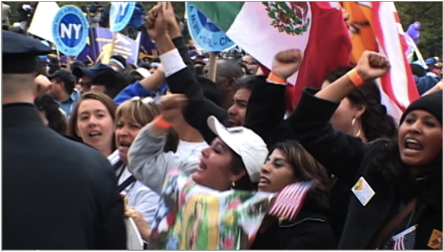
In 2003, immigrant workers, labor unions, immigrant rights advocates, civil rights organizations and faith leaders came together to do something about it. More than 900 immigrants and allies traveled by bus across America to focus public attention on the plight of immigrant workers. Along the way they met with local activists, held press conferences and participated in demonstrations in support of immigrant rights. In Washington, D.C., they called on lawmakers to pass comprehensive immigration reform legislation including a pathway to citizenship, family reunification, stronger workplace rights and civil rights for all. I was one of 106 Riders from Northern California. We were inspired by the 1961 Civil Rights Movement Freedom Riders who risked their lives fighting to end segregation, and we called this massive mobilization the Immigrant Workers Freedom Ride. It was the birth of the new Civil Rights Movement for immigrant workers in the United States.

My role on the Ride was to document our 12-day journey. The Long Ride chronicles the Immigrant Workers Freedom Ride and the on-going fight for immigrant rights to this day. The film puts a human face on this controversial issue and examines the human costs as lawmakers overhaul the U.S. immigration system. The film was released in 2017.

Eleven Immigrant Workers Freedom Riders attended the Pacifica event and participated in a lively Q&A following the screening. It was part of an ongoing effort by Pacifica Social Justice to provide information about how the immigration system is negatively impacting our community and ways to take action to change it.

The immigration issue is often framed as being simply about people living in the U.S. “illegally.” What is so often missed is that faulty immigration laws adversely impact not only people lacking documents, but legal residents and U.S. citizens as well. When there is fear about standing up for your rights at work, it casts a chill on organizing efforts affecting everyone at that workplace as well as every other workplace. Without a voice on the job and union representation, wages are lower; there are less benefits; wage theft is more likely; and health and safety conditions are more dangerous. When an immigrant loses their job or is deported and separated from their family, the impact is felt by family, friends, co-workers and neighbors, regardless of their immigration status.

Since the Pacifica event, The Long Ride screened at the Immigration Film Fest in Washington, D.C. where it won the Best Documentary Award! Additional Fall highlights included: the European premiere at Festival de Cine Político Dirigido Por Mujeres in Madrid; the Utopia Film Festival in Greenbelt, Maryland; Congregation Beth Israel Judea in San Francisco; and the Los Gatos Irish Arts & Writers Festival event Who Belongs: Immigrants, Refugees, Asylum Seekers in the 21st Century. The next screening will be at the Oshman Family Jewish Community Center in Palo Alto, CA January 8 at 1:00pm

As The Long Ride reaches a larger worldwide audience, I am constantly reminded of the importance of the message of the Immigrant Workers Freedom Ride and how it is needed all the more today. We must act with compassion towards new arrivals and fight for reform of the broken immigration system. I continue to be inspired by my fellow Immigrant Workers Freedom Riders every day. As dismal as the current situation is, I am encouraged by the organizing and successes happening around the country.

For more information visit: www.thelongride.film and Facebook @The Long Ride/El Largo Viaje

Valerie Lapin is a filmmaker, and has worked in the Labor Movement, government and on political campaigns. She lives in Pacifica and is an active member of Pacifica Social Justice.

Photo Captions:

(Courtesy of Share Productions)

  • In, 2003, more than 100,000 people rally for immigrant rights in New York. (Courtesy of Share Productions)
  • Immigrant Workers Freedom Riders march down Market Street in San Francisco. (Courtesy of Share Productions)
  • Immigrant Workers Freedom Rider and filmmaker Valerie Lapin. (Courtesy of Share Productions)
  • Original Freedom Rider Congressman John Lewis joins the Immigrant Workers Freedom Ride. (Courtesy of Share Productions)
  • The Long Ride screens at the Pacifica Community Center. (Photo: by Susanne Moore)

The Flight and Plight of Transgender People Seeking Asylum in the US

Pacifica Voice

December 1, 2018, Author: Blue Murov

In the summer of 2017 16 people formed the 1st Trans-Gay Migrant Caravan fleeing from Nicaragua, Honduras, Guatemala, El Salvador and Mexico to the US border to ask for political asylum. Four gay men and 12 transgender women arrived in Nogales, AZ on August 10, 2017. Kimberly, a transgender woman from Honduras made this statement at the border rally, “We have fled from our countries of origin because most people do not accept us as trans girls. The mistreatment against us begins in our families, when they run us from our homes. They take us out of our homes because we are trans girls. Many of us have been abused by gang members, even by the security forces. Even the police themselves have mistreated us, raped us, beaten us.

“In our journey for dignity we have suffered tremendously. We do not want to relive this violence by being referred to detention centers for men where we are at high risk of being sexually assaulted.”

Some members of the Trans-Gay Migrant Caravan had sought political asylum in Mexico believing that the Mexican government would offer them shelter and improved living conditions as LGBT people. “We were wrong. Most of us were denied the right to refugee status. Even though a few of us were granted asylum, we found ourselves reliving the experiences of violence and discrimination that we had suffered in Central America. The Mexican authorities have physically and sexually abused us on several occasions. Employees of the National Institute of Migration of Mexico, for example, tortured many of us to have sex with them. “

ICE detention centers are not ever safe places for transgender, lesbian and gay people. According to information obtained under the Freedom of Information Act from the Department of Homeland Security and from complaints of LGBT human rights advocates, it is documented that LGBTQI people in detention centers are 1.5 times more likely to be sexually violated. In retaliation, several facilities deal with sexual assaults on transgender and queer people by placing them in solitary confinement instead of protecting them from the assaults. Several gay men have been put in isolation by prison officials solely for being effeminate.

Organizations supporting the Caravan had worked really hard with local communities to arrange homes where the young immigrants could stay when they crossed the border. Instead they were immediately taken into custody by ICE, put into detention and held for several months. Information is sketchy but as of October, 2017 nine had been released, five were still being held and three had been deported to Honduras and El Salvador.

By May of this year the situation for transgender migrants and most other people had worsened. The lines of those seeking asylum at the border continue to grow longer and longer. People are waiting weeks before they are even seen. There are little to no facilities to house them while they wait. The shelter CARITAS, in Tijuana that at one time during the caravan received 35+ LGBTQI members of the community, was set on fire according to Diversidad Sin Fronteras.

On May 29th Diversidad Sin Fronteras reported the death of Roxana Hernandez while in US detention. Roxy died due to medical negligence by us immigration authorities in the country where she had hoped to start a new life. She died for being a transgender woman, a migrant who was treated neither with respect nor with dignity.

In October Joselin Beyonce, a black trans indigenous woman, a miskita warrior from Nicaragua and a member of the Trans-Gay Migrant Caravan 2017 was granted asylum. Joselin currently resides in New Mexico where she is working on developing a housing project for women released from Cibola detention. She has also directly supported the fight against trans detention by organizing Zumba classes to fundraise money for commissary.

Diversidad sin Fronteras reported on November 3 that 50+ LGBT migrants walked from Matías Romero to Acayucan, Veracruz on a journey characterized by rejection and discrimination not only by locals but by caravaneers too. They hitchhiked for over 90 miles, mostly being rejected by drivers that insulted and laughed at them. Caravan members threw water, water bottles, and peels at them. While many whistled and mocked them, others waved at them shouting good luck.

“The soñadoras of Centro America”, are in need of the following things:

  1. Clothes (Ropa)
  2. Shoes (Zapatos)
  3. Deodorant (Desodorante)
  4. Razors (Rastrillos)
  5. Soap and shampoo
  6. Socks & underware (calcetines)

If you wish to donate please use venmo to @dsf2018 “Esas, esas que caminan son las transvesties y transexuales de America Latina.

(This article was first published in UltraViolet, June 2018. You can find UV on line at: www.lagai.org)

A History of Central-American Asylum-Seekers

Pacifica Voice

December 1, 2018, Author: Susanne Jonas

Most of the asylum-seekers arriving at the US southern border are Central American women and children, the most vulnerable migrants, fleeing violence in their home countries (Honduras, Guatemala, El Salvador). Asylum-seekers are not unauthorized border-crossers; they voluntarily turn themselves in to US border officials to begin the asylum process. Even more important, they have long-established legal rights to seek asylum, based in both international law (e.g., 1951 UN Refugee Convention, 1984 UN Convention against Torture) and US national law (1980 Refugee Act).

In examining the surge of these asylum-seekers, we trace migrations over time and types of violence.  This article describes wartime and postwar migrations, with a final focus on femicide and gender violence causing women to flee, often with their children.

WARTIME

Salvadorans and Guatemalans first became visible as asylum-seekers in the US during the 1970s-80s civil wars in their countries. Several hundred thousand political opponents and dissidents, targets of  persecution by US-supported governments, fled to the US because they had a “well-founded fear” of being killed at home. During the 1980s, the Reagan administration denied 97-98% of asylum petitions by Salvadorans and Guatemalans. Only in the 1990s did a class action lawsuit (ABC v.Thornburgh) find those denials invalid, forcing the US government to give those asylum-seekers a second chance to petition for asylum. When their cases were heard in the early 2000s, a majority of the several hundred thousand who applied were successful.

POSTWAR

The civil wars ended in 1992 (El Salvador) and 1996 (Guatemala). Why did the accumulation of asylum-seekers, additionally from Honduras, continue in the postwar period? For many different reasons:

1) Conditions for the middle and working classes and the poor in El Salvador and Guatemala were not alleviated by Peace Accords ending the wars. The accords failed to strengthen and modernize state institutions, leaving these countries with weak states — incompetent, indifferent, and unaccountable. Most serious, there were no provisions for the elites to pay sufficient taxes to fund state institutions providing for citizen safety/security, much less decent jobs or economic stability.

2) Corrupt, repressive, unaccountable governance and political repression continued. The most dramatic example was the 2009 right-wing coup in Honduras, supported by the United States. El Salvador suffered almost 20 years of rightist rule under ARENA (1989-2009) and most of Guatemala’s governments were right-wing and militaristic. In short, the postwar included a significant amount of state violence, persecution and assassinations – against activists for human rights and indigenous rights, environmental organizers, and journalists — and impunity vis-à-vis postwar violence. Since 2006, there has been a UN Commission against Impunity in Guatemala (CICIG), but the current government is trying to shut it down.

3) Other U.S. actions compounded these situations, especially the greatly increased deportations under “Enforcement-Only” policies since the mid-1990s. In response to the formation of (mainly Salvadoran) gangs in Los Angeles during the 1990s among unemployed youth, the US carried out large-scale deportations of gang members since that time.  These deportees have re-formed gangs throughout El Salvador which spread to Honduras, Guatemala, and southern Mexico, and thereby created threats to citizen security in the entire region.

4) Drug cartels, organized crime rings, and gangs operated throughout the region, making northern Central America the most violent region in the world not in a war, according to various UN agencies. The homicide rates are among the highest worldwide in these three countries, and entire communities have been terrorized and threatened with forced recruitment.

POSTWAR FEMICIDE AND GENDER VIOLENCE

Throughout this entire postwar time, gender-based violence has skyrocketed. This form of violence has received insufficient attention as a factor causing many women to seek asylum. I focus here on postwar Guatemala, where it has been most rampant over time. Gender violence was part of the 36-year civil war (1960-1996), but it was primarily directed against indigenous populations in rural highlands war zones.  In the postwar, gender violence has been largely urban, and has taken two forms:

1) Femicide: targeted killings of women (killing them because they are women).  It is a staggering accumulation: over 6,500 reported/unsolved femicide murders between 2000 and 2011;  around 700 reported cases in 2016 and again in 2017 (not counting unreported) – two cases a day. For many years, Guatemala was first in femicides worldwide; since 2013, it has been third highest world-wide. Equally important, the killings have been met with governmental indifference and refusal to investigate or bring the perpetrators to justice – only 2-3% of cases were solved. None of this was changed by passage of a 2008 “Law against Femicide and Other Forms of Domestic Violence;” the number of femicides continued to increase and Guatemala was still highest in Central America in 2010.

2) Domestic violence against women:  as UN sources characterize it, increasing “severe and prolonged” domestic abuse/ violence against women has fueled the surge of asylum-seekers. Since there is no relief anywhere in Guatemala, some abused women began fleeing these situations (often with their children, in families) seeking protection in the U.S.  Some 140,000 reported domestic abuse cases were filed from 2001 to 2007 in Guatemala alone. Details of the abuse are quite horrifying. In 2008, domestic violence accounted for 70% of femicides. As with femicides, the spike in domestic violence has been ignored, not investigated, unsolved by Guatemalan police or other state authorities.

In many cases, gender-based violence has become linked to social violence from gangs, drug cartels, and organized crime rings. Norma Cruz, director of  Fundación Sobrevivientes, which works with femicide victims’ surviving families –told me that this linkage had not existed in early postwar years, but has become more common — e.g., forced recruitment of girls by gangs, sometimes even by a gang-related family member.

The UN Office of the High Commissioner on Refugees, UNHCR, did a survey of 160 interviews in 2015, using the U.S. Department of Homeland Security’s own figures taken from “credible fear” asylum screening interviews for FY 2015. UNHCR reported the DHS finding that 82 percent of Central American women and girls interviewed in that process were likely to be eligible for asylum under the Convention against Torture.

Two high-profile cases involving Guatemalan domestic violence victims have been argued by the Center for Gender and Refugee Studies, at UC Hastings School of Law in San Francisco. CGRS won these legal battles against the US government, establishing that members of a persecuted particular social group (women abused by family members, who fear great harm because of their gender) should be entitled to asylum protection in the U.S. These affirmative asylum rulings were made in 2009 and 2014 respectively, the latter being a binding precedent. These victories resulted in a larger number of Central American women asylum-seekers citing gender violence as the basis for their cases

Even though seeking asylum is a universal legal and human right, the Trump Administration. is trying to dismantle the asylum system altogether. This past June, Trump’s Attorney General, Jeff Sessions, struck down the validity of domestic abuse and gang violence as bases for seeking asylum, and argued that a “fear of abuse” will not be sufficient to gain asylum. Also in June, Sessions overturned the 2014 binding precedent concerning domestic violence. These and other arbitrary measures taken by the Trump administration are being challenged legally, as they violate existing laws, judgments, and precedents. Unless those measures are struck down, they threaten the integrity of the asylum system established by the Refugee Act of 1980.

As we reflect on the history of Central American asylum-seekers, we must acknowledge US responsibility for its involvement in past wars and present destabilization in the region. The US is legally responsible to grant asylum to qualifying petitioners under the 1980 Refugee Act and international law, mandated to allow asylum based on gender/domestic violence as determined by US courts, and ethically obligated to offer asylum by universal human rights considerations.

Susanne Jonas, a Pacifica resident taught Latin American & Latino Studies at the University of California, Santa Cruz for 24 years. Her most recent book (co-authored with Nestor Rodríguez) is Guatemala-U.S. Migration: Transforming Regions (2015).

Post navigation

<< 1 2
© 2025 Pacifica Voice, All Rights Reserved, Pacifica California USA - Email PacificaVoice All rights are reserved by Pacifica Voice. Content may not be copied, reproduced, transmitted, distributed, downloaded or transferred in any form or by any means without the Pacifica Voice editor’s prior written consent, and with express attribution to Pacifica Voice. This website DOES NOT track your web activity and DOES NOT use cookies Privacy Policy
↑